At 2:30 PM on November 8, an academic lecture focusing on the “Maritime Book Road” and the cultural transmission by Master Jianzhen was grandly held in the Lecture Hall of XueHai Building. The lecture was delivered by Professor Wang Yong, former professor at the Chinese Department of Peking University and Director of the Japanese Culture Research Institute at Hangzhou University, and was chaired by Professor Zhao Jinping, Head of the Japanese Department. The event was attended by faculty and students from the Japanese Department as well as cultural enthusiasts.
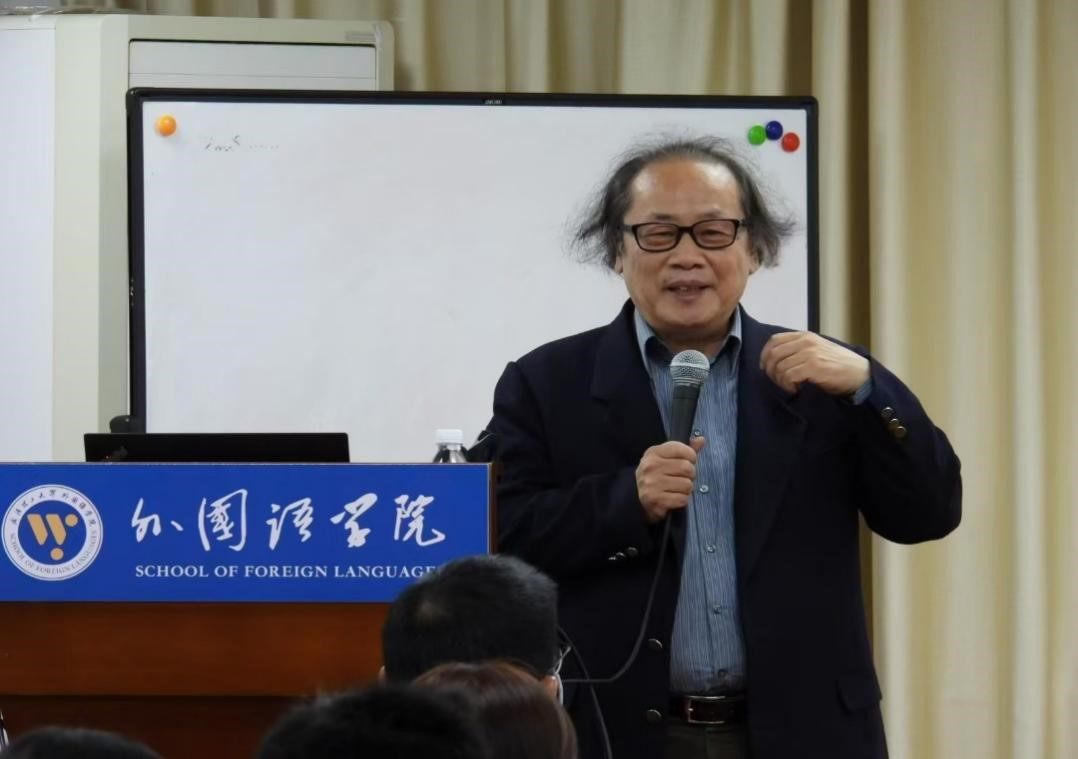
The lecture highlighted the significant role of the Maritime Book Road and Master Jianzhen in cultural exchanges. The speaker pointed out that the funamental differences among civilizations around the world have led to the diverse forms of cultural exchange. The Book Road is a unique way of cultural exchange in ancient East Asia, distinct from the Silk Road in content, form, significance, and impact. While the exchange between China and the Western Regions was primarily in terms of material civilization, Sino-Japanese exchange was more in the realm of spiritual civilization mediated through books.
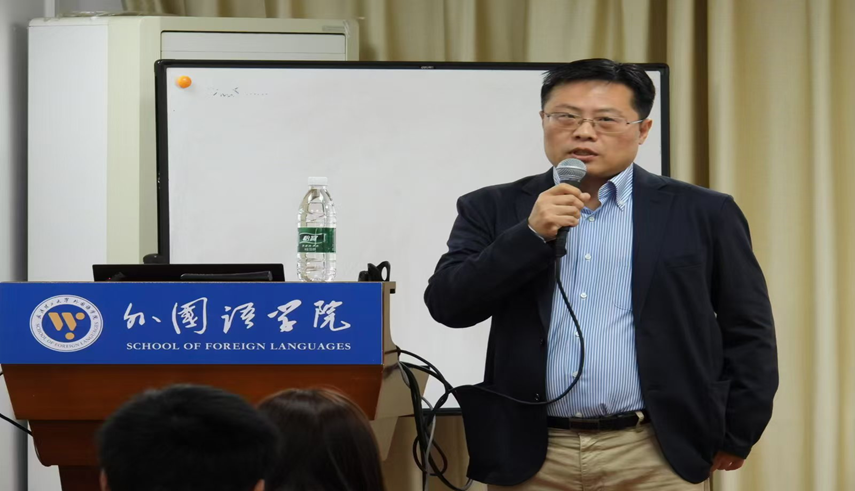
Master Jianzhen, an outstanding representative of the Tang Dynasty who sailed to Japan, is hailed as one of the pioneers of the Maritime Book Road. The lecture delved into the items Master Jianzhen carried during his voyages to Japan, particularly books such as the Daya Sutra on his second voyage and the Zhuhe Book and various Indian Scripts on his sixth voyage. By comparing various manuscripts and printed editions, the speaker corrected errors in the circulated versions. Upon reaching Japan, Master Jianzhen’s missionary activities were closely related to books. The lecture detailed the fate of the books Master Jianzhen brought, his lectures on Buddhist scriptures and commentaries, the correction of errors in all scriptures, and the borrowing of books, which showcased the importance of books in Master Jianzhen’s missionary activities. Although Master Jianzhen stayed in Japan for only ten years, his extensive, profound, and lasting influence on Japanese culture was largely achieved through books. For instance, Saicho, who was deeply influenced by the Tiantai [Tendai] scriptures and literary works brought by Master Jianzhen, established the Japanese Tiantai [Tendai] sect.
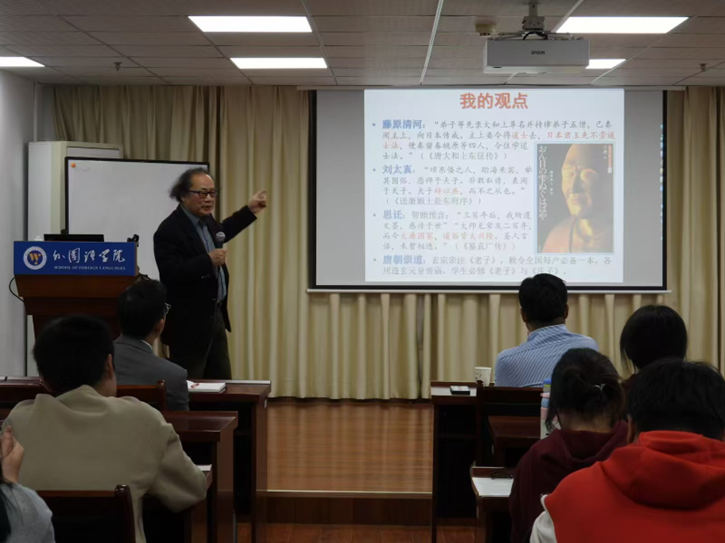
The lecture also explored the impact of the precious medicinal materials and unique prescriptions that Master Jianzhen carried on later generations, as well as the writings of his disciples, Fajin and Situo, who traveled with Master Jianzhen to Japan. These works, as an important part of the Book Road, have had a profound influence on Sino-Japanese cultural exchanges. The speaker highly praised Master Jianzhen’s historical contributions and modern significance, pointing out that Master Jianzhen not only symbolizes ancient Sino-Japanese cultural exchange but also serves as a model for building international relations in the new century.
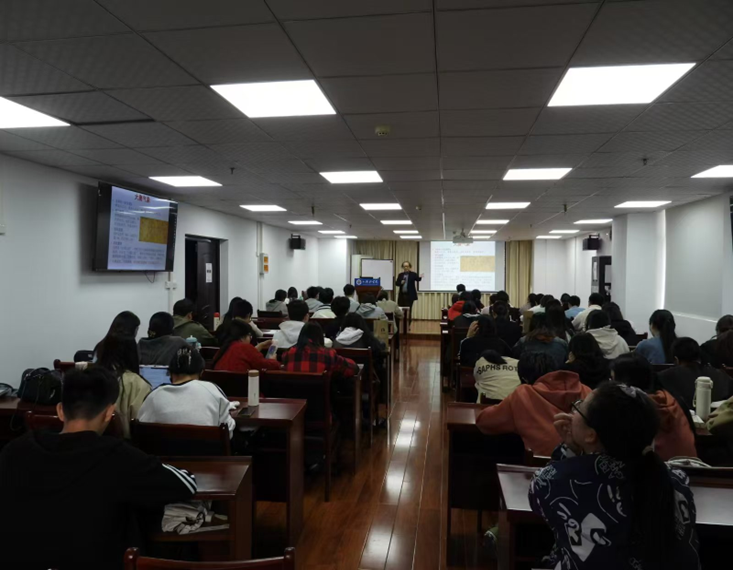
Through detailed historical materials and in-depth analysis, this lecture presented a rich and colorful image of Master Jianzhen and highlighted the crucial role and significance of books in cultural exchanges. After the lecture, scholars and cultural enthusiasts in attendance expressed that they greatly benefited from the talk and looked forward to more similar academic exchange activities in the future.
Pictures and Text: Japanese Department; Editor: Liu Si; Reviewer: Li Hui
Translators:Zheng Jingjing, Cui Dongyue
